
When I first started thinking about how Catvale should look, my immediate thought was: I want Andrew Bosley. His incredible talent for painting adventurous, magical worlds hidden deep within forests, mountains, and ruins completely captured my imagination. Those worlds felt alive and you didn’t just look at them – you wanted to disappear into them. Then reality quickly arrived and reminded me I was making my first board game entirely from my own savings ;D. There was absolutely no way I could afford an artist of that caliber, especially with a giant question mark hanging over the entire project:
- Would people even like Catvale?
- Would anyone care enough to help fund it?
The Watercolor Rabbit Hole
Still, even while focusing mostly on mechanics during the first prototypes, one thing never changed in my head:
I wanted the art to be painted by hand, on actual paper as much as possible.
At that point I was already working at Glass Cannon Unplugged, where Michał Ozon, then head of development (and now leading teams at Awaken Realms), was mentoring me and helping me to better understand the industry. One day he encouraged me to study Stonemaier Games more closely. Jamey is known for being one of the industry’s strongest voices, and his marketing somehow always looks almost effortless (as if 😉). While going through their games, I came across Wyrmspan announcement, and suddenly everything clicked.
Watercolor.
It felt perfect for Catvale almost immediately. Watercolor naturally leaves room for imagination. Shapes blend together, details disappear into texture, colors behave unpredictably, and suddenly even a simple illustration starts feeling dreamy and alive. That lack of precision actually becomes part of the charm!
Initially, I never wanted to drag my mother into all of this. She was already busy running her gallery, teaching students, and she should probably be enjoying her retirement instead of painting fantasy cats for my board game ideas 😉
But this was also an opportunity I simply couldn’t ignore. As you may know, my mother, Izabela Berdowska, is an experienced watercolor artist and member of the Polish Watercolor Association who teaches painting in her gallery and works with many aspiring artists..
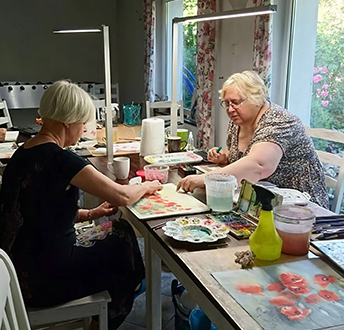
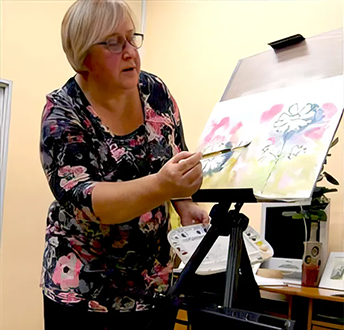
When she said she and her students would help, I remember thinking:
…this might actually be possible.
Of course, at the time I completely underestimated both how big Catvale would become and how ridiculously difficult the entire process would turn out to be 😉
My mother specialized mostly in landscapes and nature, not stylized fantasy characters. Every student had a different style, different skill level, and different habits. Meanwhile, board game illustrations require consistency, readability, and a surprising amount of precision. Suddenly we were trying to combine a very unpredictable medium with a format that really doesn’t like unpredictability.
And then there were the cats.
That’s where Natalia Albecka-Eikmann became incredibly important to the project. Natalia is exceptionally good at painting characters and expressive animals. At the time she was constantly jumping between projects involving zombies, monsters, dark post-apocalyptic horror and… watercolor cats with little capes. Which still makes me laugh when I think about it. Together we slowly started figuring out what the cats of Catvale should actually look like.
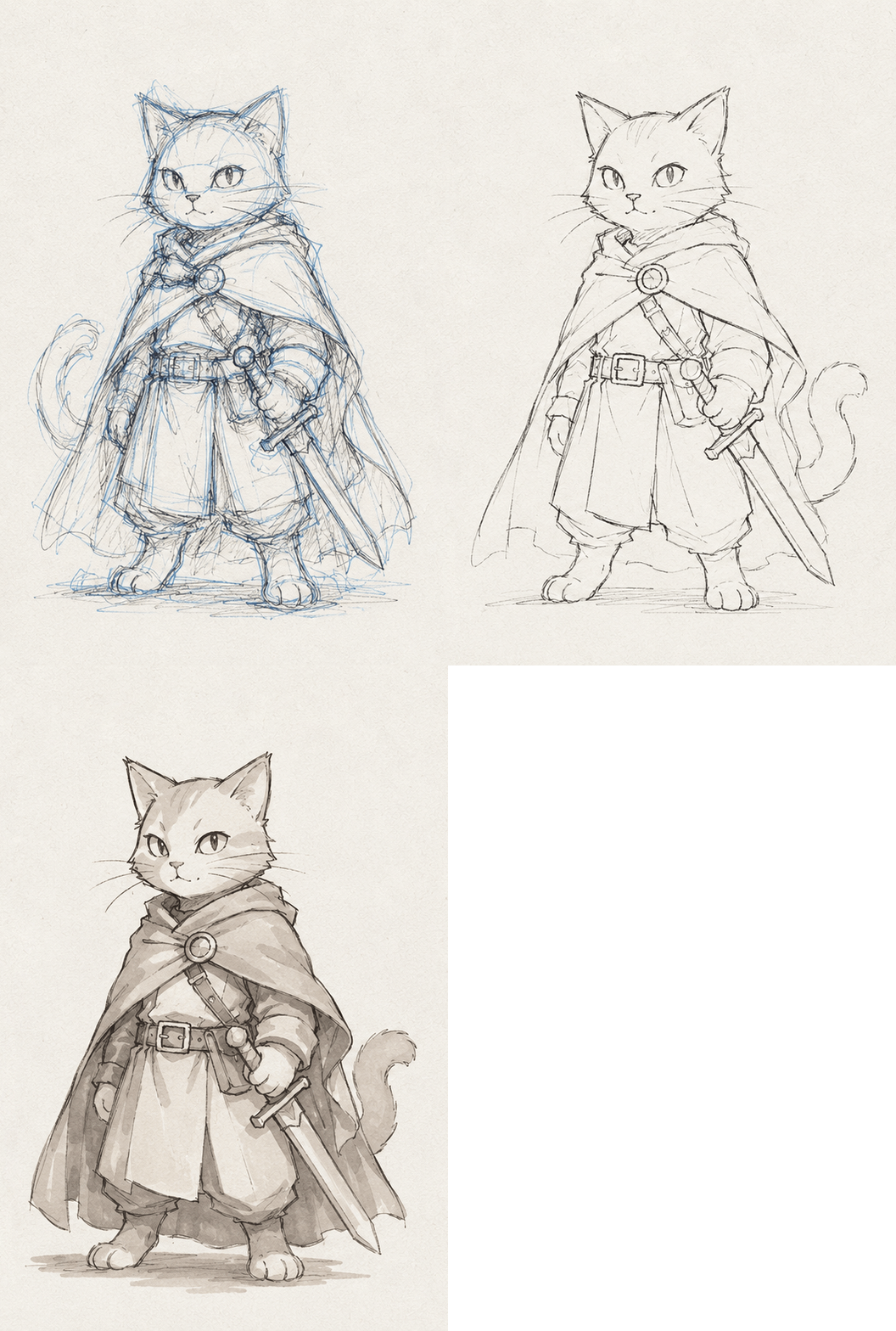
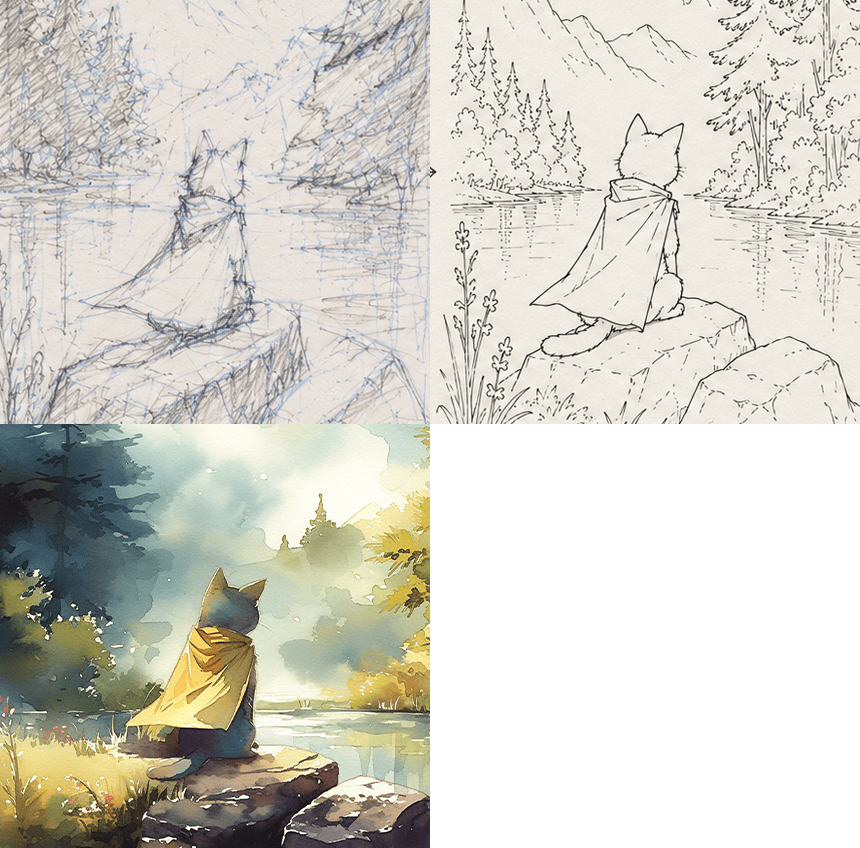
We experimented with proportions, poses, clothing, expressions and personality traits. I especially wanted the cats to have attitude.
Sass.
Some are grumpy, arrogant, suspicious, smug or slightly unhinged. Many expressions were inspired directly by real cats staring at me like I personally offended them ;D
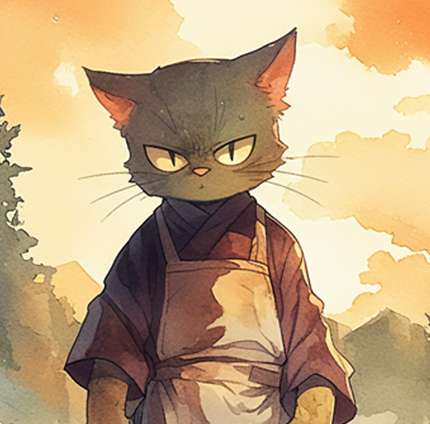
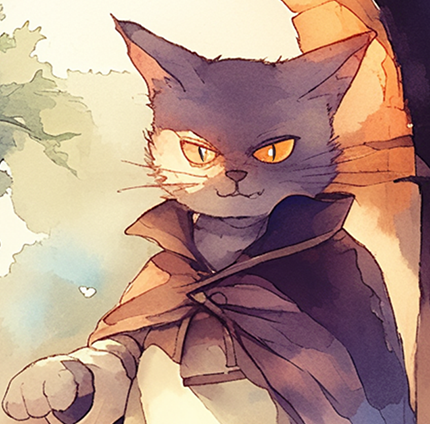
This is also where the anime influence started creeping into Catvale. When I think about expressive, visible emotions pushed slightly beyond realism, anime is one of the first things that comes to my mind. So we tried mixing a bit of that energy into the world of Catvale and somehow ended up creating this weird watercolor-anime soup. Has it worked? You tell me!
Very quickly we also realized something important, and obvious, when you think about it:
Watercolor absolutely does not forgive inconsistency.
Unlike fully digital art, where you can endlessly move things around and repaint details, watercolor has a mind of its own. If one artist paints a character from a slightly different angle, with slightly different proportions or brush pressure, the inconsistency becomes visible almost immediately.
Because of that, we had to intentionally limit the number of perspectives, poses, and angles used throughout the art. We simplified almost everything. Fewer objects lying around, empty interiors, barely any weapons or accessories. Sometimes even the buildings themselves feel abandoned. It wasn’t only an artistic decision – it was pure survival. And even then, combining all the artwork together was incredibly difficult.
Some artists painted beautiful landscapes but struggled with interiors or architecture. Others were much better with characters. Sometimes a cat looked fantastic, but the background didn’t fit at all. Other times the environment looked wonderful, but the character felt disconnected from it.
So over time we slowly developed a strange hybrid process. Sometimes backgrounds and characters were painted separately. Few times elements were physically combined before scanning. Usually art passed through multiple people before reaching the final version.
Another thing we quickly discovered is that:
Watercolor doesn’t really like details.
It’s amazing for atmosphere, soft transitions and creating mood, but much less forgiving when you suddenly need clean edges, complex shapes, lighting, or very specific little elements on a relatively small game card.
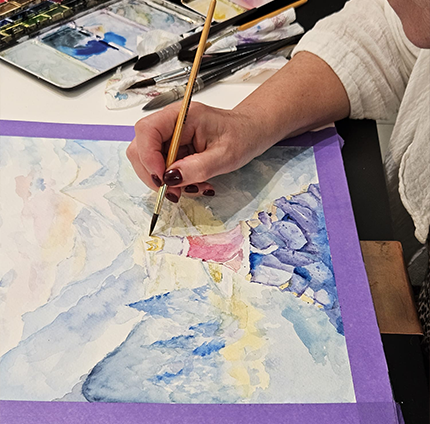
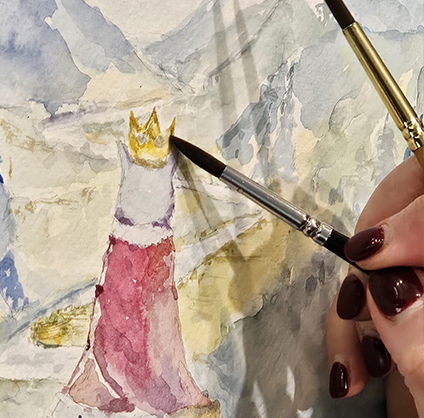
Because of that, the process slowly evolved far beyond what I originally imagined. Initially I thought the digital side would mostly involve clean-up and preparing the artwork for print. In reality, much more work became necessary. Natalia often had to digitally repaint parts of illustrations, add extra textures (and trust me, Catvale is VERY texture-heavy), strengthen lighting and shadows, add lines, improve readability, fix watercolor mishaps, and sometimes even repaint entire characters or landscapes. And I will let you in on a little secret. As Natalia once humbly said:
It’s all about the brushes 😉
That’s why I often describe Catvale’s visuals as “a watercolor base with digital makeup.” Underneath all the polish there’s still actual paint, paper, textures, imperfections and traditional artwork holding everything together.
And because everybody kept improving over those three years, older artwork constantly started looking outdated compared to newer pieces… which of course led to repainting even more things. At one point I realized we could probably keep repainting and improving the artwork forever. There is always something to adjust and for a while that became a bit of a problem. One of the biggest lesson for me was letting it go. I started noticing that many of the things I originally considered flaws were actually giving the world personality. A slightly crooked roof, weird textures, uneven brush edges, a cat expression that feels weird.
That is the Soul of the game!
I think that was an important moment during Catvale’s development. I stopped obsessing over making everything perfect and instead focused more on making the world feel alive and believable in its own strange way.
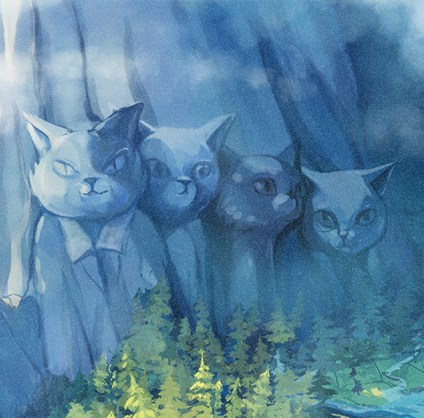
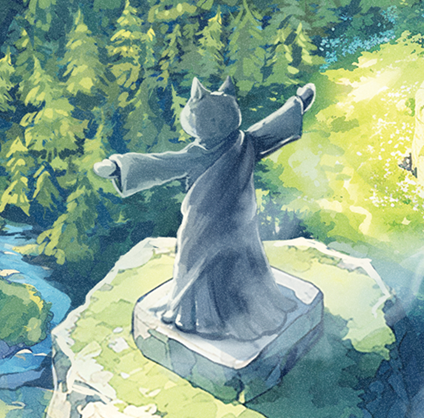
That approach also heavily influenced the game board itself, which Natalia painted almost entirely from scratch. We wanted it to stay as detailed as possible for the gameplay without losing the watercolor atmosphere, while also sneaking in a few easter eggs along the way.
So yes, if you look carefully, you might notice things like the Loch Ness Monster or Rio de Janeiro Cat-Jesus , or Mount Catshmore. At some point I called Natalia and said: “I want Mount Rushmore, but with cats.” She answered – say no more! (It probably went different but I like the barber meme too much ;)). And now we have that.
Wrapping up
Looking back now, the entire artistic process behind Catvale was long, chaotic, exhausting and incredibly rewarding. It also taught me something important: sometimes the personality of artwork comes from the things you originally wanted to “fix.”
I’m incredibly proud of all the artists who helped shape this world and bring Catvale to life. I really hope that while playing, you’ll occasionally stop for a moment, look at a card, and feel the care, patience and heart put into it!